
Put crop residue to work.
Use sugarcane bagasse as a material for molded packaging.

04 / Sustainability
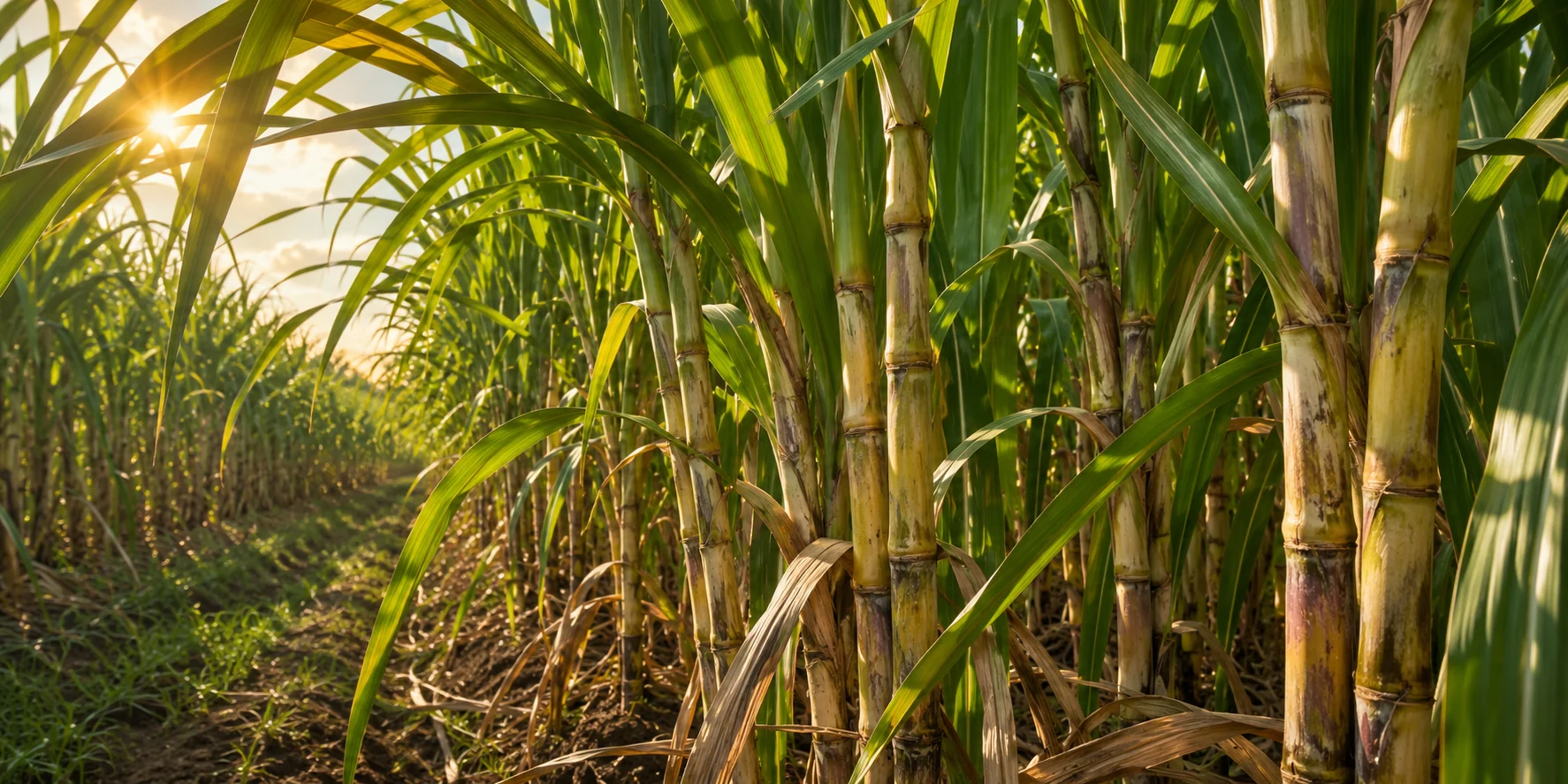
We start with the fiber left after pressing sugarcane and consider what happens to the finished pack after it’s used.
Follow the materialThe bagasse pathway
Use the fiber left after sugarcane is pressed as a feedstock for molded packaging.
Form that fiber into packaging designed for specific uses, from produce trays to takeaway containers.
Match disposal guidance to the finished packaging and the collection and processing options available where it is used.
Compare packaging formats
Estimate plastic displaced in a switch to molded fiber. If you have production fuel figures for both packs, compare fuel use too.
This example assumes packs of equal weight, switching from 100% fossil-based plastic to fiber with 0% fossil-based plastic. Choose actual plastic content for packs with mixed materials.
Fossil-based plastic
Yearly and monthly estimates assume a steady pack volume.
Share both pack formats for a product-specific comparison of production, transport and disposal.
Material and process priorities
Use sugarcane bagasse as a material for molded packaging.
Develop fiber and bio-film formats for applications that often use single-use plastic.
Include on-site wastewater treatment and reuse in the plant design.
Material questions
It’s the fibrous material left after extracting juice from sugarcane. It can be processed into pulp and formed into rigid shapes such as trays and containers.
In a 2020 manufacturing comparison, researchers estimated 0.22 kg CO₂e per kg for a sugarcane-and-bamboo fiber prototype using a carton-board proxy. They cited 7.36 kg CO₂e per kg for expanded polystyrene from earlier research. The figures reflect those manufacturing assumptions. Liu et al., Matter
A Thai lunch-box study found higher emissions for bagasse than foam under its landfill scenario and lower emissions under its modeled recycling scenario. Its bagasse boxes weighed 18 g each and the foam boxes weighed 3.6 g each. Fangmongkol and Gheewala, Journal of Sustainable Energy & Environment
Start with guidance for the exact finished format and ask which materials your local collector or processor accepts.
Tell us which product, market and use conditions you’re evaluating. Ask for the relevant product-level material, performance and disposal information for that application.
Work with us
Tell us which materials you use today and how your packaging is collected after use.